Making circularity work in practice
Blog from a guest contributor from SUEZ recycling and recovery UK
In most organisations, there comes a point where something still usable is taken out, set aside and quietly written off. This isn’t because it has reached the end of its life, but because it no longer fits what is needed at the time or place.
Multiply that across buildings, projects and supply chains, and the scale becomes clear very quickly.
That was the focus of our recent webinar, ‘Circularity in Practice – an initiative to deliver material change’, hosted by Dr. Adam Read MBE, SUEZ recycling and recovery UK Chief External Affairs and Sustainability Officer. The webinar invited an expert panel of speakers: John Scanlon, Executive Vice President UK, SUEZ; Dr. Greg Lavery, Managing Director and Founder, Rype Office; and Bill Firth, General Manager – Business Development, EMR.
The session followed the launch of the ‘Circularity in Practice’ initiative at the Renew Hub in Greater Manchester, attended by His Majesty King Charles III. The launch, supported by the British Chambers of Commerce, was attended by more than 150 Greater Manchester businesses who have signed up to the initiative, including the 3 businesses represented on the panel as founding members.
The webinar looked at how circularity is being applied in practice, and where it is already making a difference, and what the initiative could do for businesses that want to make some progress in the near future.
What is already in use
A central part of the discussion was the scale of materials already within the built environment.
Across the UK, buildings contain an estimated 559 million tonnes of steel, aluminium and copper, with around 2.3 million tonnes used each year.
Speakers described this as the ‘urban mine’, a way of recognising existing assets as significant resource. The figures shared during the session illustrated what that could mean in practice. Recovering half of those materials (when demolishing buildings, refurbishing offices, and renovating cities) could equate to hundreds of years of supply at current demand levels, while also avoiding over half a billion tonnes of carbon emissions.
At the same time, demand pressures are increasing. Copper was highlighted as one example, with estimates suggesting global supply constraints within the next decade and a potential 10 million tonne shortfall by 2040.
All this places greater emphasis on how materials already in circulation are understood, captured and managed.
Real-life applications
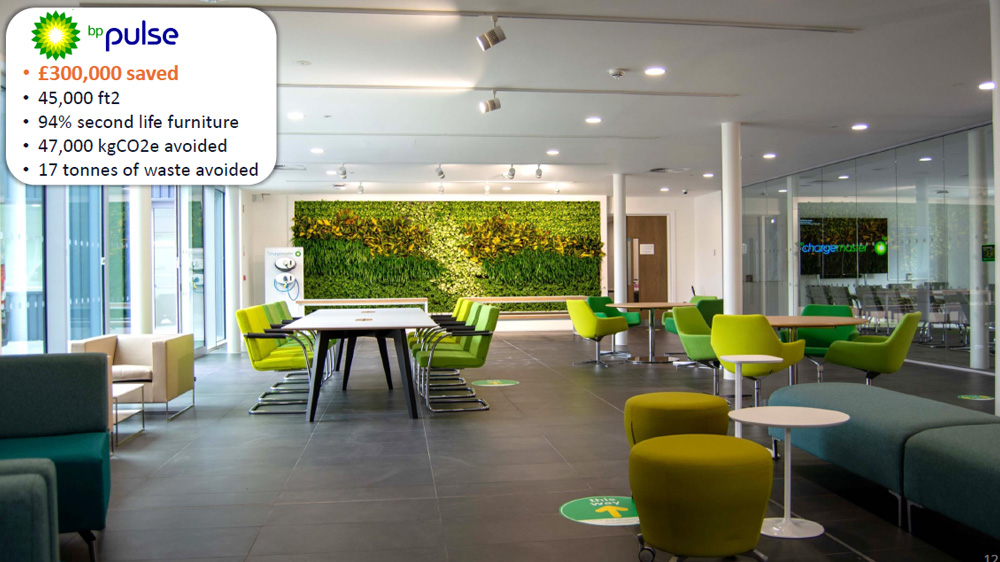
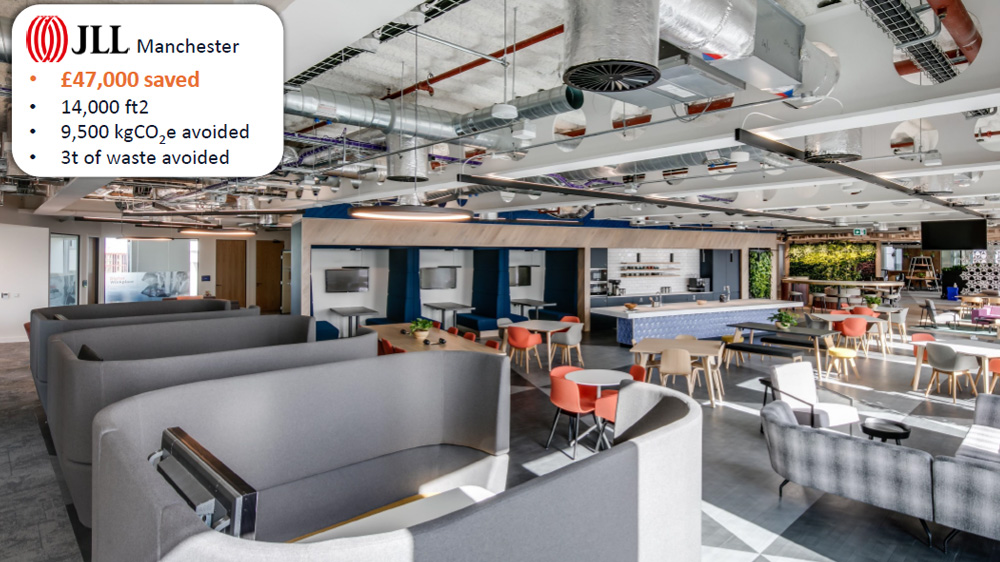
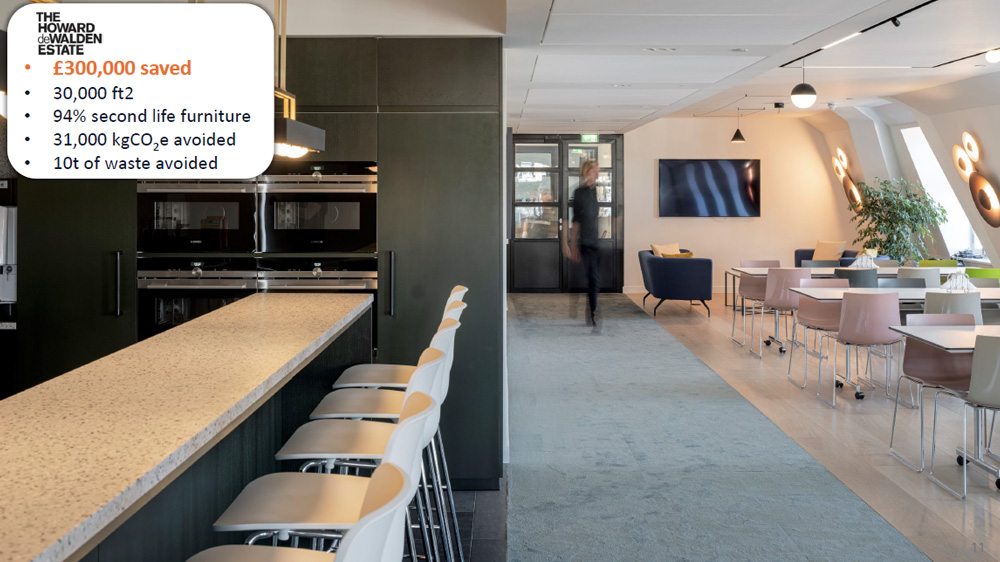
Furniture is one example where the opportunity is well established. Around 300 tonnes of furniture is sent for disposal every day in the UK, with a significant proportion still usable.
Instead of disposal, some organisations are actively choosing to remanufacture by restoring furniture to as-new condition and putting it back into use. Examples shared during the session showed this approach delivering savings on cost, as well as reductions in waste and carbon, while maintaining the expected standard of finish. This type of furniture upcycling is evident for all those who have visited the Renew Hub in Manchester where artisans, volunteers and apprentices bring old furniture back to life for resale in the local community and increasingly into local businesses.
Once completed, these spaces are often indistinguishable from those fitted with new materials. That, in itself, changes the decision on what to do next time and so momentum builds that pre-loved items and refurbished materials are not lower quality or lower value.
Why this is becoming more relevant
This is not happening in isolation.
Several of the drivers discussed during the session were practical rather than theoretical. Cost was one of them. As one speaker put it, “No one’s got as much money as they used to have”, with budgets under increasing pressure and less appetite for replacing assets that can still be used.
Resource availability was another factor. Supply chain disruption, alongside longer-term constraints such as projected shortages in materials like copper, is already influencing how organisations think about access to materials and how they manage what they already have.
There are also early signs of new policy shaping this direction. Changes to government buying standards and wider work around the circular economy growth plan were referenced as factors that will increasingly influence procurement and decision-making.
Taken together, these are not separate pressures. They are beginning to reinforce each other.
How organisations are approaching it
The webinar highlighted that applying circularity often begins with understanding what is already available. This includes identifying materials within existing assets, planning how they can be retained, reused or recycled, and working with others in the supply chain to support that process.
Collaboration was a consistent theme. Organisations involved in design, re-use, recycling and manufacturing each play a role, and bringing those parts together makes it easier to move from individual actions to a more coordinated approach.
The initiative itself is intended to support that by connecting organisations and sharing practical examples of what is already working to inspire new decision-making.
Where businesses are
A live poll during the session reflected how organisations are currently engaging with circularity.
Around 10% of participants had already signed the circularity pledge, while 17% said it was not for them. Others indicated they were considering it or would need to discuss it internally.
This indicates a range of positions, from early adoption through to those still assessing how it fits within their operations.
One of the clearer messages from the session was that circularity does not begin with large-scale change.
It often starts with reviewing what is already owned, considering alternative uses for materials, and taking a first step, whether through a pilot project or a change in how materials are managed at the end of their current use.
The impact of these decisions can extend beyond individual organisations. It was noted that if each household placed two items into re-use annually, this could support tens of thousands of new jobs, put money into the economy and generate wider social value.
Towards the end of the session, each speaker was asked for a single takeaway and the answers were straightforward.
- “What’s stopping you?”
- “Think re-use.”
- “I’m a hero.”
They weren’t presented as slogans, but as prompts. Small, direct ways of reframing decisions that are often made quickly and without much thought.
Perhaps circularity moves not in bigger statements, but in those everyday choices, repeated often enough to change the outcome.
Come join us in our commitment to enhanced environmental stewardship and good practice! Visit the Circularity in Practice page and sign the pledge today!
This is the first of a two-part series exploring circularity from a business perspective. The next article will focus on the questions raised during the session, looking more closely at cost, logistics and the practical considerations organisations are working through as they begin to apply circular approaches.
If you missed the live webinar session, you can watch it on-demand here.
Samples of Circularity in Practice (office furniture upcycling)